For a lot of Australians who are getting close to retirement, getting to their superannuation feels like a big financial step. But a lot of people don’t know that when and how you take out super can have a direct effect on your Centrelink entitlement and sometimes lower your payments more than you thought.
Super is meant to help with retirement income, but how it works with Centrelink’s income and asset tests can lead to problems that you didn’t expect. A poorly timed withdrawal or change to the structure can lower pension payments and change long-term financial stability.
This is how super withdrawals are looked at, what common mistakes retirees make, and what you should think about before taking money out of your account.
 Centrelink Compliance Changes 2026: New Monitoring Rules Could Impact Payments For Recipients
How Centrelink Looks at Superannuation
How you get to your superannuation and how old you are affect how it is handled.

- Super in the accumulation phase is an asset for Australians who are old enough to get a pension.
- Super in the pension phase is checked against income and asset tests.
- Drawdowns could change how income tests are done.
- Account-based pensions are subject to rules that say they are.
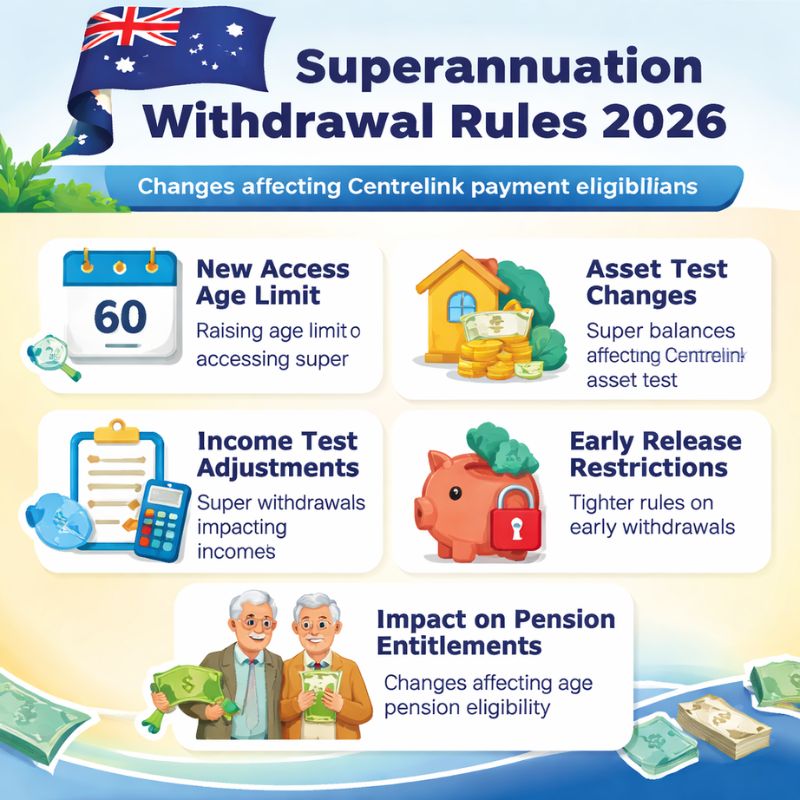
Most super balances are no longer exempt from Centrelink assessment once you reach pension age.

How Withdrawals Can Lower Payments
Taking out large amounts of money from your super can have a number of effects on Centrelink.
Some common effects are
- more assets that can be assessed if the money is kept in a bank account.
- Less money for pensions if asset limits are reached.
- Changes to how income is assessed through deeming.
- You are no longer eligible for supplements.
Even short-term increases in account balances can lower benefits during review periods.
The Danger of Big Withdrawals in One Go
It might be tempting to take a lump sum to pay off debt or buy something big. But once the money is taken out, it is usually counted as an asset.
- Moving super into cash savings makes your assets look bigger.
- Giving money as a gift may make you break the rules about deprivation.
- Buying some assets may not lower assessment levels.
- Withdrawing money close to review dates can change the numbers.
According to the rules right now
- The balance in the account is counted as an asset.
- Income is based on what you say, not on what you actually take out.
- There are rules for minimum withdrawals.
- Changes in balance have an effect on future evaluations.
Understanding deeming rates is important for predicting changes in payments.
Questions and Answers
Is super an asset?
Yes, when you turn 65.

Can a one-time payment lower my pension?
Yes, if it adds to the assets that can be taxed.
What does “deeming” mean?
A way to figure out how much money you make from your financial assets.
Does giving gifts right away lower your assets?
No, because there may be rules about giving gifts.
Is super tax-free before retirement age?
Yes, in a lot of cases.
Can changes to your home affect your assessment?
Usually not if it’s your main home.
Do pensions based on accounts count in a different way?
Yes, they are judged by deeming rules.
Does timing have an effect on payments?
Yes, especially around review times.
 Centrelink Payment Update 2026: New Benefit Rates And Eligibility Changes Impact Nationwide
Can I change my mind about a withdrawal?
Once the withdrawal has been processed, you usually can’t change it back.