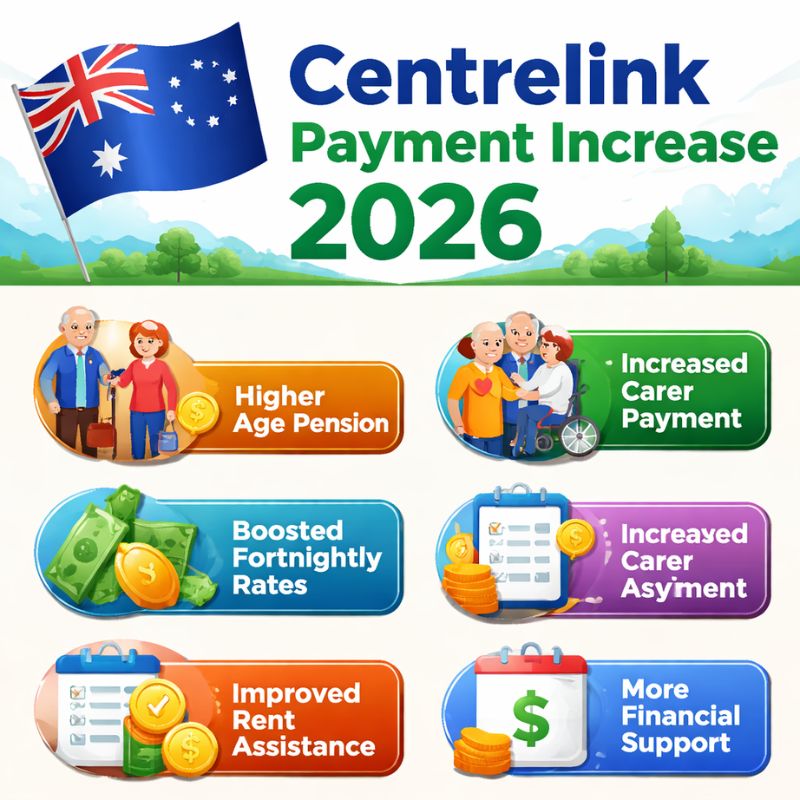
Every year, many Australians on fixed incomes wonder if their payments will keep up with the cost of living. In 2026, pensioners and caregivers will see confirmed increases in their Centrelink payments. The new higher rates will be paid every two weeks and are meant to reflect the rising cost of living in Australia.
The changes will automatically go to everyone who gets the Age Pension or Carer Payment through the social security system. Even though the increases might not seem like much on paper, they are part of a system that is meant to keep people who rely on government support from losing income over time.
What Will Change in 2026
Indexation is a legal process that changes Centrelink payments. This process makes sure that payment rates go up with inflation and wage growth instead of staying the same as prices go up.
 Centrelink Compliance Changes 2026: New Monitoring Rules Could Impact Payments For Recipients
The following changes will happen in 2026:
Both single and married people will get more money from the Age Pension.

- The rates for Carer Payments will go up, just like pensions, because of the same indexation rules.
- The amounts of Pension Supplements will also go up.
- The income and asset limits will go up, which will lower the chance of losing eligibility just because of inflation.
- Recipients don’t have to reapply for any of the changes.
The Australian Government sets the rules for the increases, which are handled by Services Australia through Centrelink.

How Indexation Works
Indexation is the process that decides how much the payments from Centrelink go up. Rates for pensions and carer payments are checked and changed regularly based on the best result from a number of economic indicators, such as:
- The Consumer Price Index (CPI) keeps track of inflation.
- The Pensioner and Beneficiary Living Cost Index (PBLCI).
- Male Total Average Weekly Earnings (MTAWE), which shows how wages are going up.
The system uses a number of benchmarks to make sure that payments don’t fall behind either prices or the standard of living in the community.
In real life, this means that payments are changed to make up for when costs go up for things like food, electricity, gas, and rent.

New Fortnightly Payment Rates for 2026
The 2026 increases mean that the maximum rates for core payments will be higher, but the exact amounts will depend on things like your personal situation, your relationship status, and any supplements you may be receiving.
| Payment Type | Estimated Fortnightly Rate Before 2026 | Estimated Fortnightly Rate From 2026 |
|---|---|---|
| Age Pension – Single | Around $1,100 | Around $1,150 |
| Age Pension – Couple (each) | Around $830 | Around $870 |
| Carer Payment – Single | Around $1,100 | Around $1,155 |
| Pension Supplement (maximum) | Indexed lower rate | Higher indexed rate |
Who Will Get the Most Out of It
The 2026 payment increases are mostly good for:
- People who get the full-rate Age Pension.
- People who get the full-rate Carer Payment.
- Part-time pensioners who are close to the income or asset limits.
- Couples who get their pensions in two parts.
- Long-term recipients whose costs rise faster than their pay.
People who get more than one supplement may notice several small changes instead of one big one.
What You Should Do
Most people who get this don’t need to do anything.

Things to keep in mind:
 Centrelink Payment Update 2026: New Benefit Rates And Eligibility Changes Impact Nationwide
- Payments will go up on their own.
- Your regular payment statement will show the new rates.
- Obligations to report stay the same.