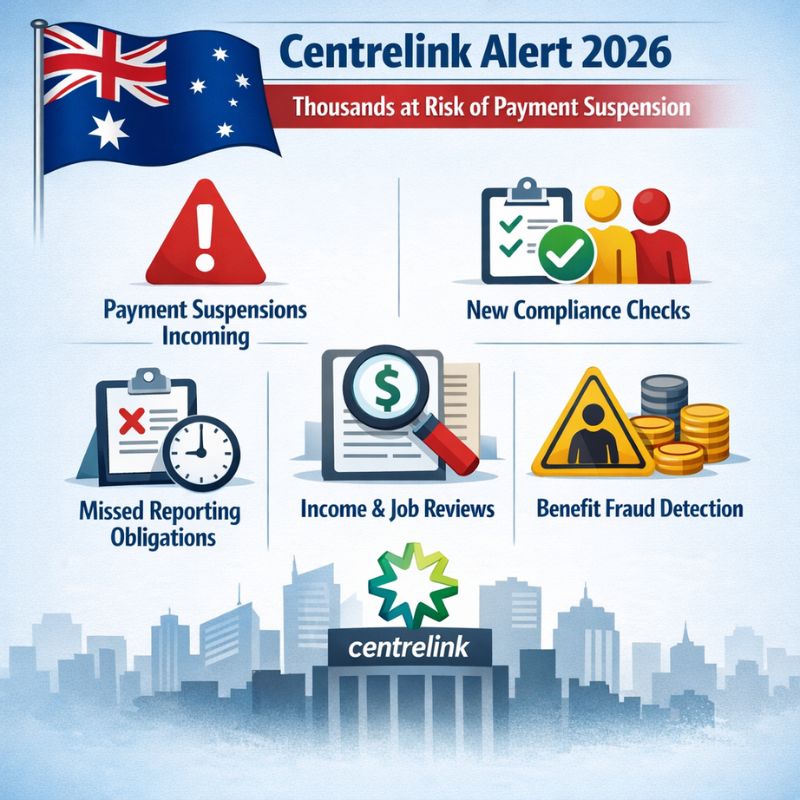
Centrelink is Australia’s main social services platform. The organization plans to start stricter compliance checks in 2026. These new rules will make sure that people receiving benefits meet all the requirements. If someone does not comply with the new standards their payments could be stopped. Many people across Australia now face the possibility of losing their Centrelink benefits when these compliance checks begin. This situation is worrying for vulnerable groups who depend on these payments to survive.
Centrelink’s New Compliance Checks for 2026
Starting today Centrelink has introduced stricter compliance checks that could affect thousands of recipients. These checks are part of an ongoing effort to ensure eligibility standards are met across all Centrelink benefits. Claimants will now face additional scrutiny regarding their personal information and work requirements. With these new measures payment suspensions are a real possibility for those found to be non-compliant. While these checks are necessary for maintaining the integrity of the system they pose significant risks for people already struggling financially.

How Will These Compliance Checks Impact Claimants?
Centrelink’s new compliance rules will likely have the biggest impact on vulnerable groups such as seniors people with disabilities and single parents. Many people receiving payments may find it hard to meet the tougher documentation standards or might be late in submitting required paperwork. Anyone who does not provide the necessary information could face payment delays or suspension. Since the checks are starting right away, people claiming benefits should look over their records and get ready for any questions to prevent their payments from being interrupted.
 Centrelink Payment Increase 2026 Confirmed: New Fortnightly Pension And Carer Rates Introduced
What Are the Risks of Non-Compliance?
Not meeting the updated compliance requirements could cause serious money problems for people who depend on these payments. When payments stop claimants might suddenly lose their income. This can be particularly hard for those who count on Centrelink as their only source of money. The penalties for not following the rules might mean longer waiting times before payments restart or benefits could stop completely. The outcome depends on each person’s specific circumstances. People receiving payments should move quickly to make sure their paperwork is current and complete. This helps them avoid these problems. Getting advice from a professional or calling Centrelink directly to ask questions about what is needed might be essential.
 Centrelink Compliance Changes 2026: New Monitoring Rules Could Impact Payments For Recipients
Summary of the New Centrelink Compliance Checks
In summary these new compliance checks represent a major shift in how Centrelink handles benefits. The system is designed to ensure that the right people receive the support they need but it also creates the possibility of suspensions for those who do not meet the necessary criteria. Claimants should stay informed & organized to avoid unnecessary disruptions in their payments. With heightened scrutiny on eligibility it is essential for all Centrelink recipients to take these changes seriously and prepare accordingly.

| Compliance Check Criteria | Potential Risks |
|---|---|
| Updated personal information | Payment delays or suspension |
| Proof of work or activity | Non-compliance penalties |
| Regular documentation submissions | Extended waiting periods |
| Failure to provide accurate details | Complete cessation of benefits |
Frequently Asked Questions (FAQs)
1. What are Centrelink’s new compliance checks?
The new compliance checks are stricter measures introduced by Centrelink to ensure recipients meet eligibility criteria for benefits.
2. Who will be affected by these compliance checks?
Vulnerable groups such as seniors, people with disabilities, and single parents may be the most affected by these changes.
3. What happens if I fail to meet the compliance requirements?
Failure to meet the requirements could lead to payment delays, suspensions, or even a complete cessation of benefits.

4. How can I avoid payment suspension?
Ensure all your personal details are up to date and submit any required documentation promptly to avoid payment disruptions.