
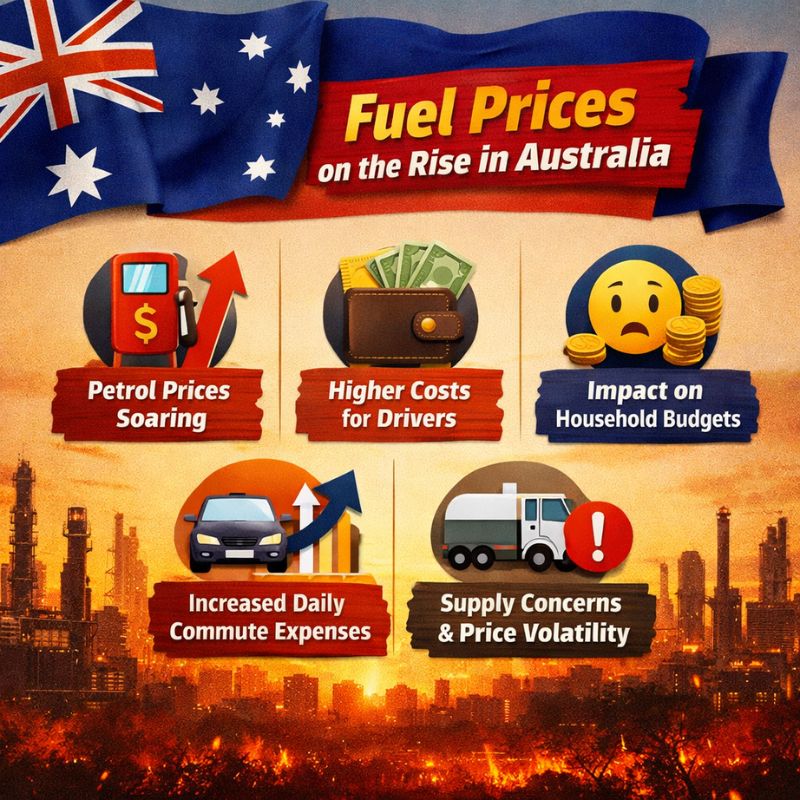
Fuel prices in Australia are climbing again and drivers nationwide are preparing for another hit to their wallets. Global oil prices are pushing higher & Australian motorists will likely see even more expensive fuel this week. This increase puts real pressure on household budgets as fuel costs keep changing and add to the overall cost of living. This article looks at why fuel prices are going up again and what this means for Australian drivers. The recent surge in global oil prices is the main reason behind rising fuel costs at Australian service stations. International oil markets have been volatile due to several factors including production cuts by major oil-producing nations & ongoing geopolitical tensions in key regions. When crude oil becomes more expensive on the global market Australian fuel prices typically follow the same pattern within days or weeks
Why Are Fuel Prices Rising in Australia?
The recent increase in fuel prices across Australia stems mainly from rising global oil costs that are impacting markets around the world. When crude oil prices go up, the expense of bringing in refined products also increases which directly pushes petrol prices higher at service stations. Changes in the exchange rate between the Australian dollar and other major currencies add to the unpredictable nature of fuel pricing. These combined global influences have led to significant price jumps, meaning drivers now pay more each time they fill their tanks.

The Impact on Australian Drivers and Households
Australian drivers are dealing with higher fuel prices that put real pressure on family finances. Most households depend on their cars for getting to work & handling everyday tasks so when fuel costs go up they end up spending more each time they fill the tank. Since the cost of living is already climbing in other areas, this extra expense makes things even tougher. The impact goes beyond just what drivers pay at the service station. When fuel becomes more expensive, it costs more to transport goods around the country. Businesses then pass these higher costs onto their customers through increased prices for products and services. This creates a chain reaction that affects everyone. In 2026 drivers are experiencing more financial pressure from fuel costs than they have in recent years.

What Can Drivers Do to Manage the Fuel Price Surge?
Australian drivers have multiple options to reduce the effects of increasing fuel costs. One approach involves adopting fuel-efficient driving habits like keeping a consistent speed and minimizing time spent idling to maximize each tank of petrol. Another strategy is to search for lower fuel prices using comparison apps or websites that show current rates in your local area. Also drivers might think about buying a vehicle with better fuel economy or using public transport more often to decrease their dependence on petrol. Taking these actions can help manage the financial pressure created by recent fuel price rises.
 Centrelink Alert 2026: Thousands at Risk of Payment Suspension as New Compliance Checks Begin Today
Summary of Australia’s Fuel Price Surge
The recent increase in fuel prices across Australia stems from higher global oil costs that have pushed up petrol prices nationwide. This rise is putting extra pressure on Australian families who are already struggling with growing everyday expenses. Although drivers can take some steps to reduce their fuel spending by driving more efficiently and shopping around for better prices the general forecast indicates that expensive fuel will remain a worry for motorists for some time to come.
| Factor Contributing to Price Hike | Impact on Fuel Prices |
|---|---|
| Global Oil Prices | Direct increase in fuel costs |
| Exchange Rate Fluctuations | Higher import costs for refined products |
| Fuel Demand | Rising prices during peak demand periods |
| Local Taxes and Levies | Additional financial strain on drivers |
Frequently Asked Questions (FAQs)
1. Why are fuel prices rising in Australia?
Fuel prices are rising due to global oil price increases and fluctuations in the exchange rate.
 Centrelink Payment Increase 2026 Confirmed: New Fortnightly Pension And Carer Rates Introduced
2. How does the rise in fuel prices affect Australian households?
Higher fuel prices put additional pressure on household budgets, particularly for families who rely on cars for daily activities.
3. What can drivers do to manage the fuel price surge?
Drivers can use fuel-efficient driving techniques, compare fuel prices, and consider switching to more fuel-efficient vehicles.
 Centrelink Compliance Changes 2026: New Monitoring Rules Could Impact Payments For Recipients
4. Will fuel prices continue to rise in the future?
While it’s uncertain, the global oil market suggests that fuel prices may remain volatile and could rise further.