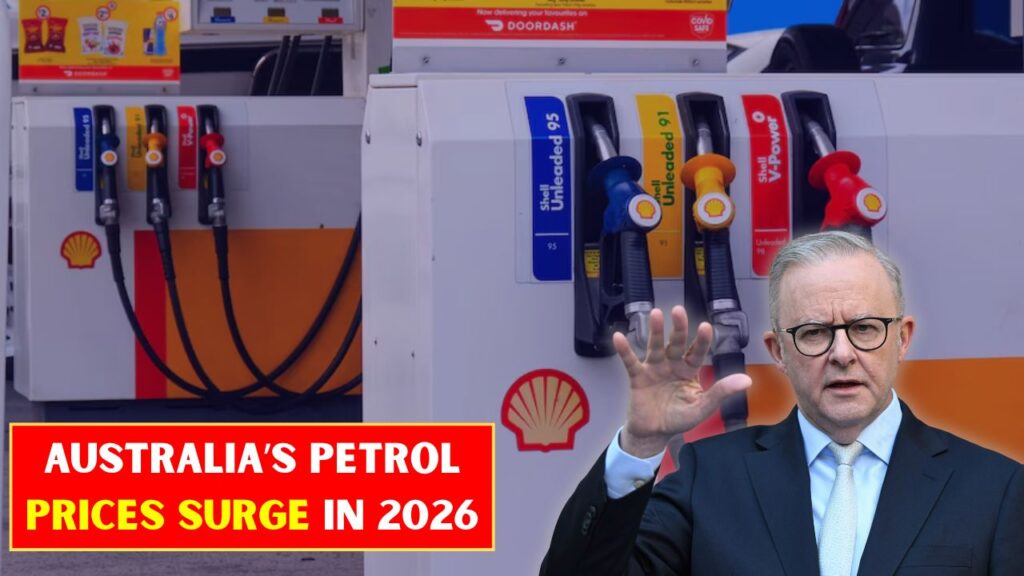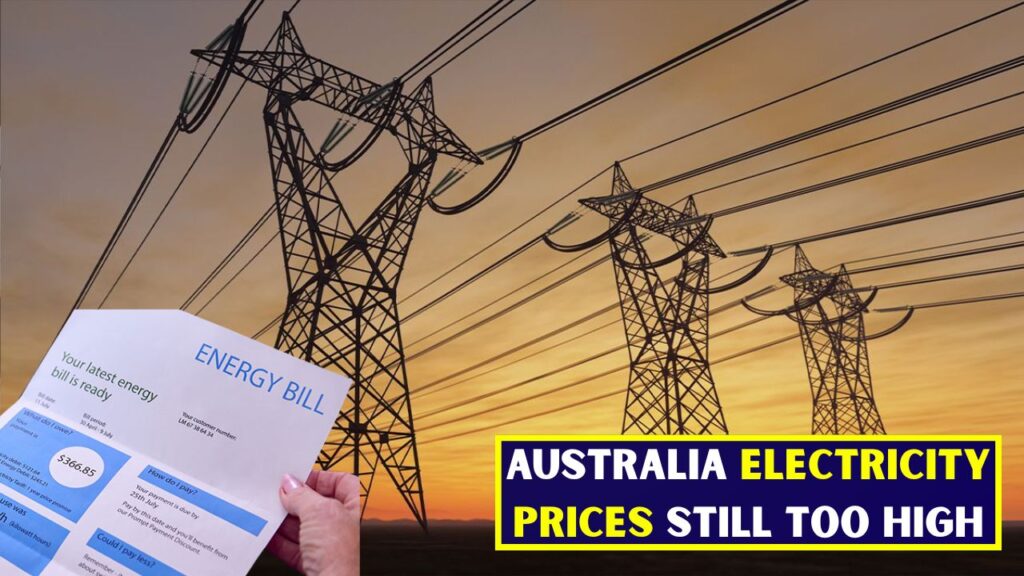
Australia’s energy market remains a hot topic in 2026 as electricity costs stay high in many areas. Both households & businesses feel the squeeze as rising bills eat into daily budgets. Efforts to control pricing are happening but supply issues and infrastructure expenses along with global energy shifts keep pushing rates up. This article looks at the latest energy price situation in Australia and examines regional differences and causes while explaining what consumers should expect as the energy landscape changes.
Current Energy Price Patterns
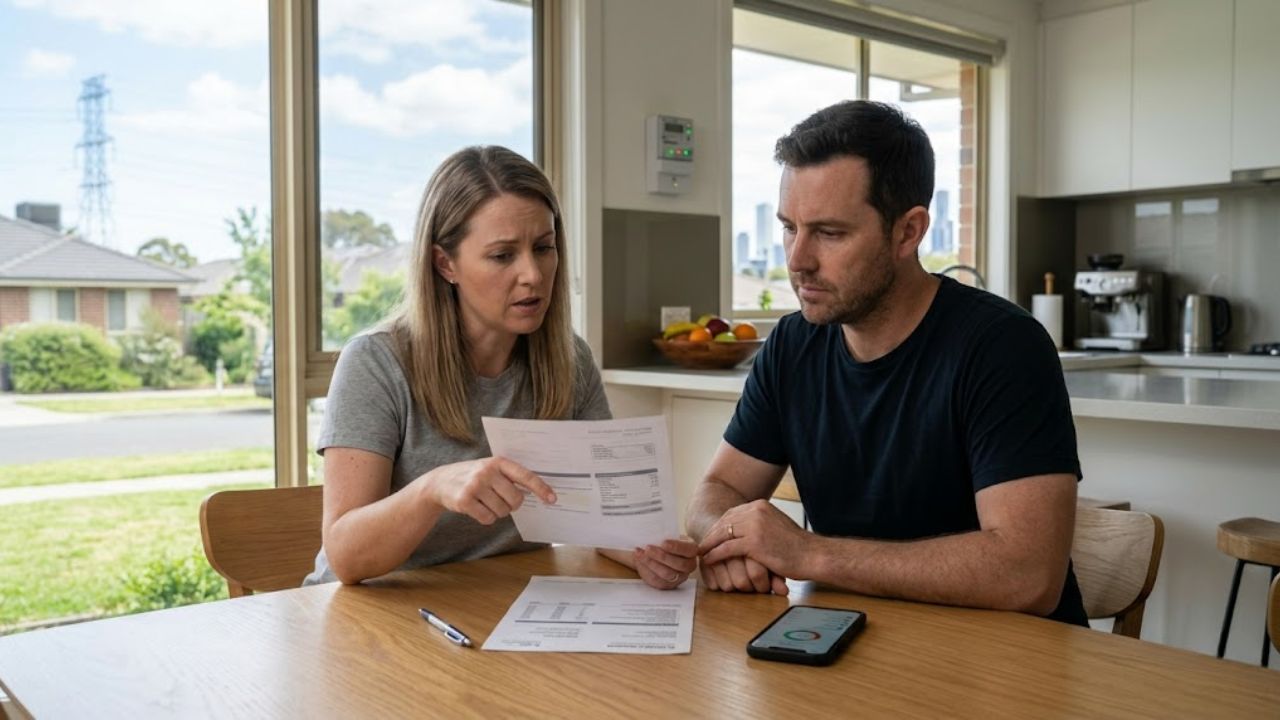
Electricity prices in Australia during 2026 keep climbing especially in cities and high-demand areas. Many households report bigger monthly bills due to increased energy demand and infrastructure spending. Market regulators say wholesale price pressure is a main driver caused by changing fuel costs and supply chain problems. Network maintenance expenses have also pushed up charges across distribution systems. Renewable energy use is growing but the shift has created temporary cost jumps that leave consumers dealing with uncertain pricing.
How Prices Differ Between Regions
Energy costs vary widely across Australian states with places like New South Wales and South Australia seeing higher rates than others. This gap comes from regional supply shortages and different infrastructure quality. Areas with less power generation face higher distribution fees that get passed to consumers. Regions putting money into renewables deal with transition costs that temporarily raise electricity prices. Some areas have stable grid systems that help keep price increases moderate. Knowing these regional differences helps consumers choose better energy plans.

What Pushes Energy Prices Higher
Multiple connected factors drive up electricity costs in Australia in 2026. Global energy markets affect local pricing through imported fuel costs and political changes. At home aging infrastructure needs upgrades which means capital investments that utilities recover through higher tariffs. The move toward cleaner energy brings renewable integration problems including storage and grid balancing costs. Extreme weather events have boosted peak demand and strained the system further. These combined elements explain why energy prices stay high across major regions.

What to Expect Going Forward
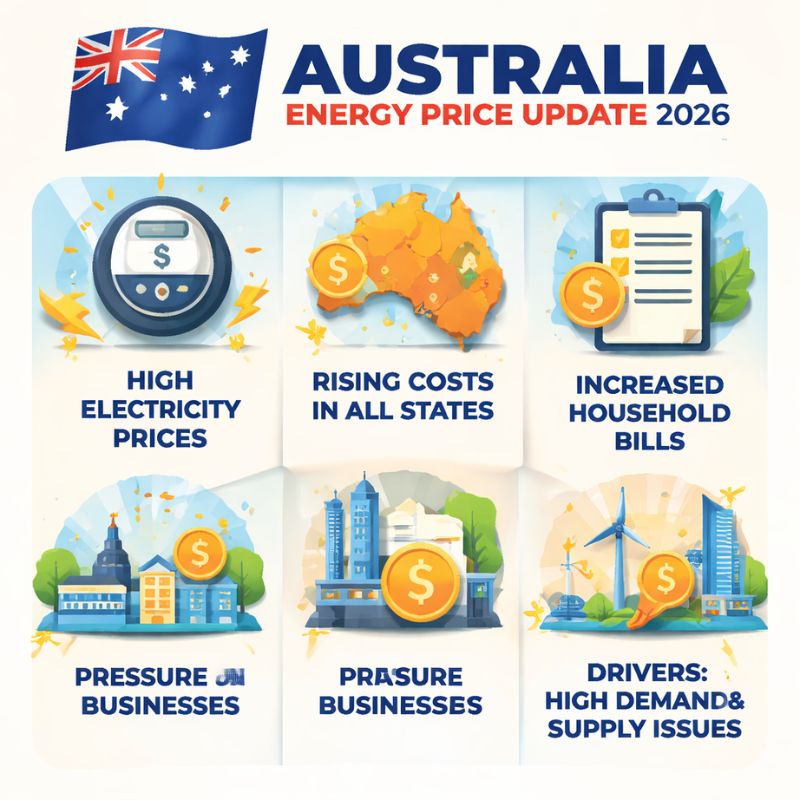
Australia’s energy market should slowly stabilize though prices will likely stay elevated for now. Government policies focused on expanding renewable energy & strengthening grid systems could reduce pressure over time. Consumers might save money through energy efficiency improvements and smarter usage habits. More competition among providers could lead to better pricing in the market. Climate effects & global supply conditions still create uncertainty though. Overall planning for the long term & supporting clean energy will be key to making electricity more affordable in the future.
| Region | Price Details |
|---|---|
| New South Wales | 32 cents per kWh with increasing trend due to high demand |
| Victoria | 29 cents per kWh with moderate rise from infrastructure upgrades |
| Queensland | 27 cents per kWh staying stable with balanced supply |
| South Australia | 35 cents per kWh showing high increase during renewable transition |
| Western Australia | 26 cents per kWh with slight rise from isolated grid |
Common Questions
1.Why are electricity prices high in Australia in 2026?
Prices rise because of demand growth and infrastructure costs along with global energy influences.

2.Which region has the highest electricity cost?
South Australia currently has some of the highest electricity prices.
3.Will electricity prices decrease soon?
Prices may stabilize gradually but short-term reductions are unlikely.

4.How can consumers reduce energy bills?
Using energy-efficient appliances and monitoring usage can help lower costs.