Australia’s Economic Landscape in 2026: What the Interest Rate Signals Mean Australia’s economic situation in 2026 is getting a lot of attention as the central bank deals with ongoing inflation problems & changing global conditions. The Reserve Bank of Australia has suggested possible adjustments that could affect borrowers and investors and households throughout the country. Even though earlier tightening measures were introduced inflation remains stubborn and many Australians are watching closely to see what happens next. This update looks at the latest interest rate signals and what they mean for the economy and how people can prepare for potential changes in Australia’s financial outlook.
Australia Interest Rate Update 2026 and RBA Policy Direction
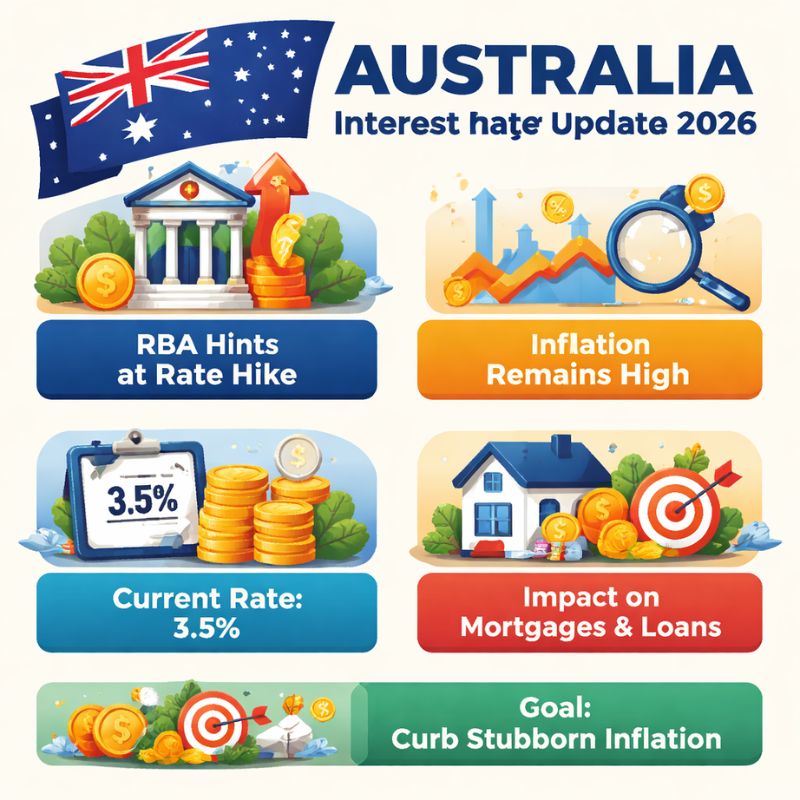
The latest Australia interest rate update for 2026 shows the RBA’s careful but firm approach to controlling inflation. Policymakers are considering whether further tightening is needed while also thinking about risks to economic growth. Previous rate hikes have slowed spending but inflation still sits above the target range and this has led to discussions about a possible rate increase. The central bank keeps emphasizing its strategy to control inflation while watching for risks to economic growth. Analysts think the RBA may use a data driven approach in upcoming meetings and make decisions based on real-time indicators rather than just forecasts.

 Centrelink Crackdown 2026: New Verification Rules Trigger Payment Delays for Some Claimants
Impact of Interest Rate Changes on Australian Economy
Interest rate changes can affect multiple sectors and influence everything from mortgages to business investments. A higher rate environment usually means higher borrowing costs and this can slow consumer spending and reduce demand. For homeowners this creates increased pressure from mortgage repayment stress and this is especially true for those on variable loans. Savers may benefit from improved returns on their savings though. Businesses face challenges in expansion because of reduced credit access and this can influence employment and overall economic activity.
 Urgent Warning for Pensioners 2026: New Rules Could Impact Centrelink Payments From This Week
What the 2026 Interest Rate Outlook Means for Australians
The 2026 interest rate outlook suggests continued uncertainty but also opportunities for those who plan carefully. Households are being encouraged to focus on budget planning habits and reduce unnecessary debt where they can. Financial experts recommend building a strong emergency fund to handle unexpected rate hikes. Exploring fixed rate options could provide stability in a fluctuating market as well. For investors adapting to market volatility trends will be important because interest rate movements often reshape investment strategies and returns
Summary of Australia Interest Rate Trends
Australia’s interest rate trends in 2026 show a balancing act between controlling inflation and maintaining economic stability. The RBA’s signals indicate that further action remains possible if inflation does not ease as expected. This creates a situation where financial decision making becomes more important than ever. Individuals & businesses need to stay informed and adapt to changing policy signals & prioritize long term stability. By focusing on risk management strategies Australians can better navigate the evolving financial environment.
 Australia Rental Crisis Worsens 2026: Tenants Hit With Sudden Rent Hikes Across Major Cities
| Factor | Current Status | Impact |
|---|---|---|
| Inflation Rate | Above Target | Pressure on RBA decisions |
| Interest Rates | Moderately High | Increased loan costs |
| Housing Market | Slowing Growth | Reduced buyer demand |
| Consumer Spending | Declining | Lower economic activity |
| Savings Returns | Improving | Better returns for savers |
Frequently Asked Questions (FAQs)
1. What is the current interest rate trend in Australia?
Interest rates are currently elevated as the RBA focuses on reducing inflation.
2. Will interest rates rise again in 2026?
Further rate hikes are possible depending on inflation data and economic conditions.
3. How do interest rates affect mortgages?
Higher interest rates increase monthly repayments for variable-rate home loans.

4. What should individuals do during rising interest rates?
They should manage debt carefully, build savings, and review financial plans regularly.