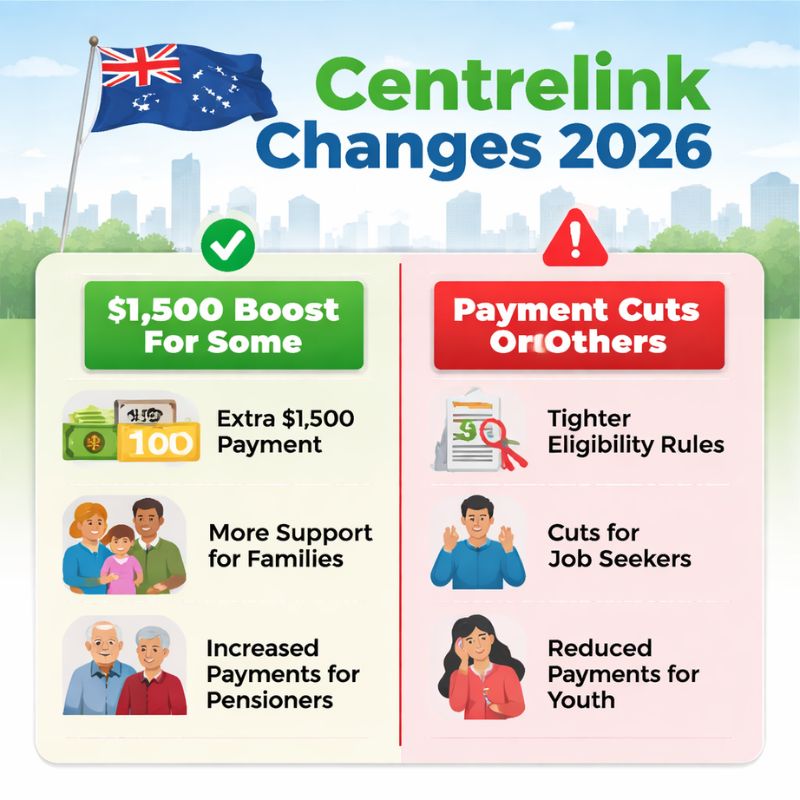
In 2026, welfare reforms through Centrelink and Services Australia bring both positive and negative impacts for different groups. Some will receive increased support, while others may face reduced or discontinued payments. These changes are meant to provide targeted relief but also ensure accountability.
What Are the Major Changes in 2026?
The government has implemented a range of reforms via Centrelink and Services Australia to address growing welfare demands and prevent misuse:
- $1,500 one-time financial boost for eligible individuals.
- Stricter compliance rules for JobSeeker recipients.
- Updated income and asset limits.
- Expanded rent assistance for selected groups.
- Enhanced reporting for individuals with fluctuating incomes.

Who Will Receive the $1,500 Boost?
This financial boost is only available to certain eligible groups, including:
 Centrelink Payment Update 2026: New Benefit Rates And Eligibility Changes Impact Nationwide
- Long-term JobSeeker recipients who comply with regulations.
- Age Pensioners with low assets.
- Carer Payment recipients.
- Low-income families receiving Family Tax Benefit Part A.
Who Might Lose Payments?
Some individuals may risk losing their payments due to the following reasons:

- Non-compliant JobSeeker recipients who miss mutual obligations.
- Individuals exceeding income thresholds.
- Households with undeclared or inconsistent income.
- Part-time or casual workers with fluctuating earnings.
- Missed job interviews or training sessions.
If compliance rules aren’t met, payments may be suspended, and future payments could be affected.
Impact of These Changes
The 2026 reforms bring both relief and stress:
- Positive Impact: Low-income families will receive much-needed financial support.
- Negative Impact: Casual workers and those with irregular incomes may face increased compliance pressures.
Payment Impact Table
| Recipient Type | 2026 Change | Possible Result |
|---|---|---|
| Age Pensioner (low assets) | Lump sum support | Up to $1,500 increase |
| JobSeeker (compliant) | Lump sum support | Up to $1,500 increase |
| JobSeeker (non-compliant) | Strict rules | Risk of payment suspension |
| Family Tax Benefit recipient | Targeted benefit | Short-term relief |
| Casual worker (variable income) | Tight reporting rules | Possible payment reduction |
Why Were These Changes Introduced?
The government’s rationale for these changes includes:
- Rising cost of living.
- High welfare spending.
- Prevention of system misuse.
- Encouragement for individuals to remain in the workforce.
Policy experts stress that achieving the right balance between support and accountability is crucial.
What Should You Do Now?
If you are a Centrelink recipient, follow these steps to ensure compliance and avoid any issues:
- Regularly check your myGov account for updates.
- Ensure accurate income reporting.
- Follow JobSeeker requirements and obligations.
- Stay updated on income and asset limits.
- Seek professional financial advice if your payments change.
Understanding the Economic Context
Australia’s economic conditions show:
- Low unemployment but high underemployment.
- Casual workers lack stable income.
- Rising rent and utility costs.
The $1,500 payment serves as short-term relief but is not a permanent solution to these ongoing challenges.
Final Thoughts
These reforms introduce both support and challenges:
- Financial relief for some groups.
- Stricter rules and potential penalties for others.